
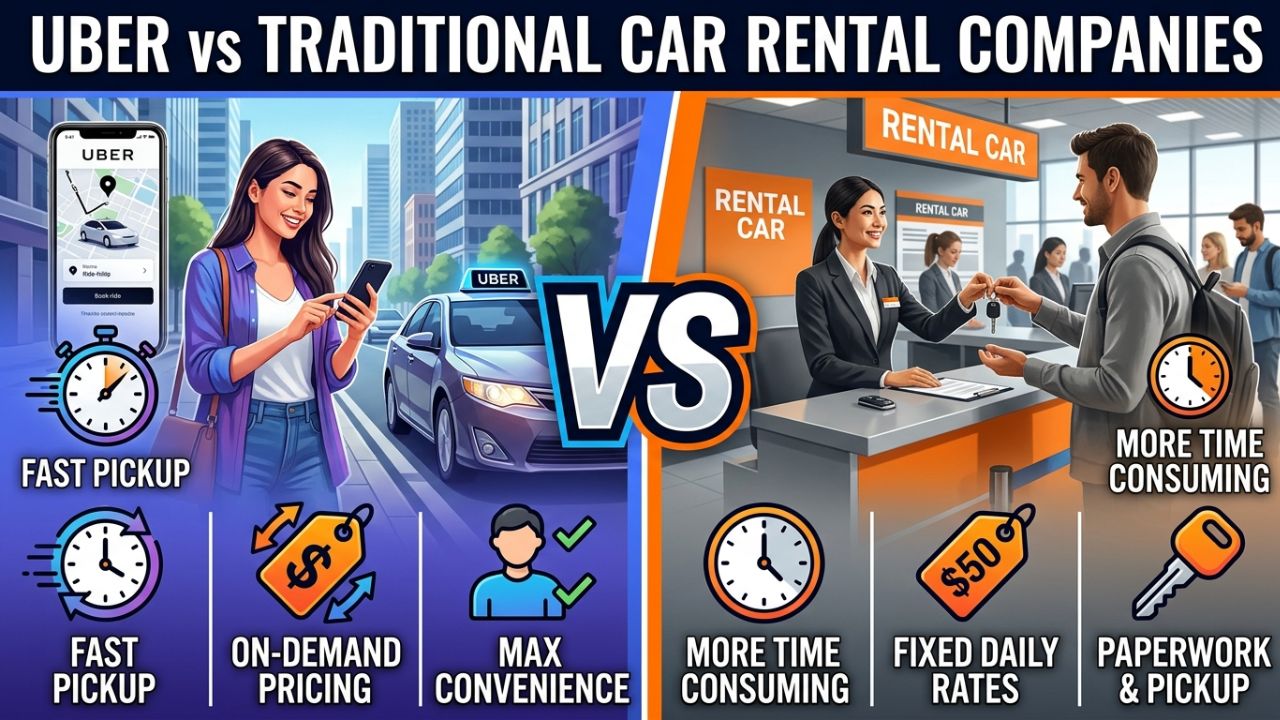
Deciding between Uber and renting a car from companies like Localridego, Avis, or Enterprise isn't always simple. It depends on your trip length, where you're going, and how much driving you plan to do. In 2025 and 2026, both options improved in some ways, but the trade-offs stayed clear.
What’s the Real Difference?
At a basic level:
- Uber = you book a ride, a driver picks you up
- Traditional car rental = you drive the car yourself
That one difference affects cost, convenience, control, and even safety.
How Uber Works Today
Uber has become more than just a ride app. In 2025–2026, it offers:
- On-demand rides within minutes
- Scheduled pickups
- Airport transfers
- Multiple ride types (budget to premium)
You don’t worry about driving, parking, or fuel. You just book and go.
Best for:
- Short trips
- City travel
- Airport pickups
- People who don’t want to drive
How Traditional Car Rental Works
Companies like Hertz, Avis, and Enterprise Rent-A-Car rent vehicles for a fixed time.
You pick up the car, drive it yourself, and return it later.
Best for:
- Full-day or multi-day travel
- Road trips
- Areas with limited ride-hailing coverage
Cost Comparison (2025–2026)
Cost is where most people get stuck. And honestly, it depends on how you travel.
Uber Costs
- Pay per trip
- Prices change based on demand
- Surge pricing during peak hours
- No fuel or maintenance cost
Short trips: usually cheaper
Long distances: gets expensive fast
Car Rental Costs
- Daily or weekly rates
- Fuel cost is on you
- Insurance may add extra cost
- Deposit required
Long trips: usually cheaper overall
Short use: often not worth it
Simple Rule:
- Few short rides → Uber is cheaper
- All-day use → rental car wins
Convenience: Which Is Easier?
Uber
- No paperwork
- No driving stress
- No parking issues
- Book from your phone
But:
- You may wait during peak hours
- Drivers can cancel
Car Rental
- Full control of your schedule
- No waiting for drivers
But:
- Pickup and return process takes time
- You deal with traffic and parking
If you want zero hassle, Uber feels easier
If you want freedom, rental is better
Flexibility and Control
This is where car rentals stand out.
With Uber:
- You depend on driver availability
- Route is handled by the driver
- Stops may cost extra
With Rental Cars:
- Go anywhere, anytime
- Make unlimited stops
- Change plans freely
For business trips or exploring new areas, rental cars give more control.
Safety and Comfort
Both options have improved a lot in recent years.
Uber Safety Features
- GPS tracking
- Driver ratings
- Emergency contact options
Still, quality can vary depending on the driver.
Rental Car Safety
- You control the vehicle
- Modern cars come with safety features
- No unknown driver involved
If you trust your driving, rentals feel more predictable.
Travel Scenarios: What Should You Choose?
Let’s make it practical.
1. Airport Pickup
- Uber is better
- No waiting in rental queues
- No parking stress
2. Daily Office Commute
- Uber works well if distance is short
- Rental may cost less if used daily
3. Family Trip
- Rental car is the better choice
- More space, more control
4. City Errands
- Uber is easier
- No parking headaches
5. Long Road Trip
- Rental car wins, no debate
- Uber would be too expensive
Availability in Bangladesh (GEO Insight)
In places like Dhaka and nearby areas:
- Uber is widely available in cities
- Rental services are growing but less digital
Local services like Pathao also compete with Uber, but rental options still rely on offline bookings in many cases.
That means:
- For quick city travel → Uber is more practical
- For planned trips → rental still works better
Pros and Cons (Quick View)
Uber
Pros
- Easy to book
- No driving needed
- Good for short trips
Cons
- Surge pricing
- Not ideal for long trips
- Less control
Traditional Car Rental
Pros
- Full control
- Better for long trips
- Fixed daily cost
Cons
- Upfront deposit
- Driving responsibility
- Extra fees possible
2025–2026 Trends You Should Know
Travel is changing, and both options are evolving.
Uber Trends
- More electric vehicles
- Better pricing transparency
- Expansion in smaller cities
Car Rental Trends
- App-based booking systems
- Subscription-style rentals
- Electric and hybrid fleets
The gap between both is getting smaller. But the core difference remains: drive yourself vs get driven.
Which One Should You Choose?
Here’s the honest answer:
- Choose Uber if you want quick, simple travel
- Choose car rental if you need time, freedom, and distance
There’s no one “best” option. It depends on your situation.
your driving.
FAQs About Uber vs Traditional Car Rental
1. Is Uber always cheaper than renting a car?
No. Uber wins for short city trips or 1-2 days with few rides. For longer stays, multiple stops, or road trips, rentals usually cost less overall. Always compare quotes for your dates and routes.
2. What about insurance—does Uber cover everything?
Uber provides coverage while you're in the ride. Rentals often need separate insurance or credit card protection. Read the fine print on both. Rentals can have higher deductibles if you skip extra coverage.
3. Which works better for airport trips?
Uber offers convenient pickup zones with no counter wait. Rentals involve a shuttle but give you the car immediately for onward travel. If you need wheels right away for a long drive, rent. For a quick ride to your hotel, Uber is simpler.
4. Can I use Uber for a full road trip?
You can, but it gets expensive with distance and wait times between rides. Rentals give unlimited miles and freedom to stop anywhere. Most people switch to rentals for anything beyond city limits.
5. Are there new options blending both in 2025-2026?
Yes. Uber Rent lets you book traditional cars through the app, sometimes with delivery. Partnerships with Hertz and others grew. Peer-to-peer like Turo also sits in between. Still, core differences remain—Uber for rides, rentals for control.
Think about your actual plans. How many trips? How far? How much driving do you want? Run real numbers for your city and dates. That usually makes the choice obvious. Safe travels, whatever you pick.