
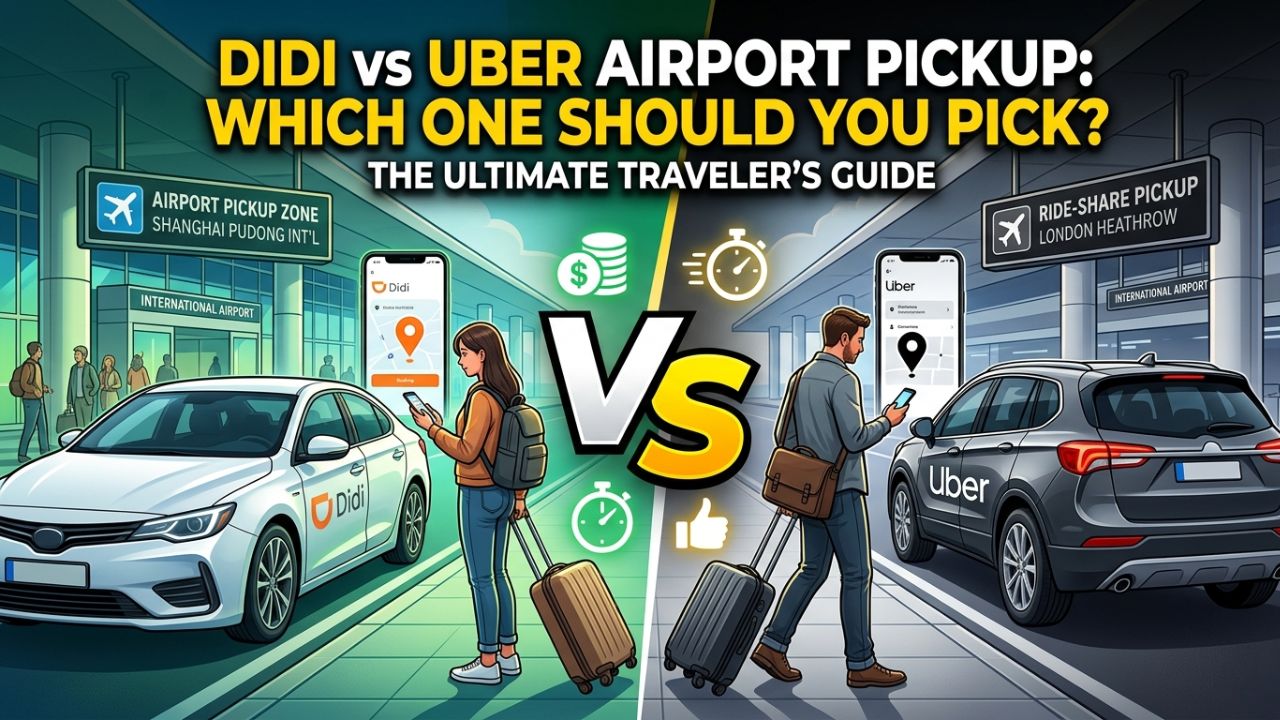
Airport pickups can feel stressful. You land tired, with bags, and just want a quick ride out. If both Didi and Uber work where you’re going, it’s worth comparing them. I looked at how they handle airport rides in places like Australia, where both apps compete hard, plus quick notes from Mexico and China. Prices, wait times, and pickup spots differ a lot depending on the city. Here’s a straight breakdown based on what actually happens in 2026.
Location matters. In Dhaka, for example, Didi doesn’t run yet. You’ll use Uber or local options at Hazrat Shahjalal International Airport. But if you’re traveling to Sydney, Melbourne, Mexico City, or Beijing, both apps are in play. This guide focuses on real differences so you can decide fast.
In Dhaka, where Didi is not available yet, you can rely on our car rental in Dhaka with driver for reliable airport pickup.
How Airport Pickups Work with Didi and Uber
Both apps let you book from the terminal. You open the app, drop your pin at arrivals, and request a ride. But the details vary.
With Uber, you often head to a designated rideshare zone right outside the terminal. In many airports, drivers wait in a queue and get matched to you. Uber tracks your flight automatically in most places. If your plane is late, the driver gets an alert and adjusts. You can also schedule a pickup up to 90 days ahead with Uber Reserve for a small fee.
Didi works similar but feels more real-time. You pick your terminal in the app, and it shows the exact pickup zone with photos or steps to walk there. In China, you can add your flight number for a meet-and-greet style service on Premier rides. No long advance booking like Uber, though. It’s mostly on-demand.
Both pass on airport fees—usually $4-5 AUD or equivalent. Tolls and waiting time get added too. Nothing fancy, just straightforward.
Want a more premium and stress-free experience? Learn about professional chauffeur service in Bangladesh.
Pricing: Didi Usually Wins on Cost
This is where Didi shines for most people. In Australia, Didi runs 10-15% cheaper on standard airport-to-city rides. For example, Melbourne airport to CBD might cost $36-54 with Didi Express versus $40-60 with UberX during off-peak. Sydney trips save $5-15 easily.
Airport surcharges stay low on Didi too—sometimes $1-3 less than Uber. Surge pricing hits Uber harder, up to 4x during busy mornings or evenings. Didi caps lower, around 2.5x, and it happens less often.
In Mexico City, users report Didi saving 10-30% on airport runs compared to Uber. China is Didi territory anyway—rides to Beijing or Shanghai airports stay cheap, often $2-3 for short hops in local currency.
Uber costs more but throws in premium options like Black or Comfort if you want a nicer car. If budget is tight and you’re okay waiting a bit, Didi saves real money. Always check both apps side by side before you book.
Looking for transparent local pricing? Check our online car booking in Bangladesh options.
For general travel cost comparisons, check resources on TripAdvisor.
Pickup Locations and Convenience
This is the biggest practical difference I saw.
In Melbourne Tullamarine, Uber gives you kerbside pickup at Terminals 1, 2, and 3. You walk straight out and meet the driver close by. Didi sends you to a separate zone a few minutes further away—fine without heavy bags, annoying with luggage.
Sydney and Brisbane use similar designated zones for both. Uber feels a touch quicker to reach. In smaller Australian airports like Perth or Adelaide, both are straightforward but Didi has fewer drivers.
China airports with Didi often have clear signs and sometimes staff in orange hats for Premier pickups. Uber follows local airport rules everywhere, which can mean a short walk or queue.
Bottom line: Uber edges out on convenience at the terminal in places like Melbourne. Didi works fine but plan for that extra walk.
Need service in another city? Explore our car rental in Chittagong for airport transfers too.
Wait Times and Availability
Uber usually gets you a car faster. Normal waits run 3-7 minutes in major Australian airports during the day. Didi sits at 8-15 minutes, sometimes longer early morning or in smaller cities.
Peak hours or bad weather stretch both, but Uber recovers quicker because of more drivers. In Mexico, Didi can feel slower at the airport but still reliable. China is Didi’s home turf, so availability stays strong.
If your flight lands at a busy time, Uber gives better odds of a quick match.
App Experience and Booking
Both apps are simple. Download, add a card or local payment, and go.
Uber feels more polished for travelers. Flight tracking, easy changes to scheduled rides, and clear PIN verification at the airport. You can text or call the driver without sharing your number.
Didi keeps it basic and clean. Upfront pricing shows right away. In Australia it accepts Alipay and lets you earn Velocity points. Some drivers speak multiple languages, which helps if English isn’t your first.
Neither app is complicated. If you already use one back home, stick with what you know.
Safety and Driver Quality
Both run background checks, insurance, and in-app SOS buttons. Uber added more audio recording options in some cities. Didi uses facial recognition for drivers in several markets.
User reviews say cars stay clean on both. Didi drivers in Australia and Mexico often get praised for friendliness. Uber has more premium vehicles if you pay extra.
I didn’t see big red flags for either at airports. Share your trip details with someone, same as always.
Pros and Cons
Didi pros:
- Cheaper fares, especially airport-to-city
- Less aggressive surge pricing
- Good for budget or standard rides in big cities
- Earns points with some airlines in Australia
Didi cons:
- Longer waits and thinner driver network outside major hubs
- Separate pickup zones that mean extra walking
- No strong advance booking
Uber pros:
- Faster pickups and broader airport coverage
- Kerbside service at places like Melbourne
- Flight tracking and easy scheduling
- More vehicle options
Uber cons:
- Higher prices and bigger surges
- Can feel crowded with drivers during peaks
Which One Should You Choose?
Pick Didi if saving money matters most and you’re in a major city with good coverage. It works great for planned trips when you’re not in a rush.
Go with Uber if you want speed, convenience, or you’re landing at odd hours. The extra cost buys reliability and less hassle at the terminal.
Best move? Open both apps when you land and compare the price and ETA right there. Takes 30 seconds and usually saves you something.
FAQs About Didi vs Uber Airport Pickup
1. Is Didi always cheaper than Uber for airport rides?
Not always, but usually yes—10-15% lower in Australia and similar in Mexico. Check both apps because surges or promotions can flip it. Airport fees stay roughly the same.
2. Which app has better pickup spots at the airport?
Uber wins in spots like Melbourne with curbside access. Didi often uses a further zone. In Sydney or Brisbane they’re close. Always follow the app map to avoid confusion.
3. Can I schedule an airport pickup in advance?
Uber lets you book up to 90 days ahead with flight tracking. Didi focuses on real-time rides—no strong advance option in most places. Use Uber Reserve if your flight time is set.
4. Is Didi available at every airport where Uber is?
No. Uber covers way more airports worldwide. Didi sticks to major cities in Australia, Latin America, and China. In Dhaka right now, only Uber works at the airport.
5. What happens if my flight is delayed?
Uber adjusts automatically via flight tracking. Didi needs you to update manually or message the driver. Both let drivers wait a bit before fees kick in, but check the app rules for your airport.
Airport rides don’t need to be complicated. Compare the two apps when you arrive, factor in your bags and how much time you have, and pick what fits. Safe travels.