
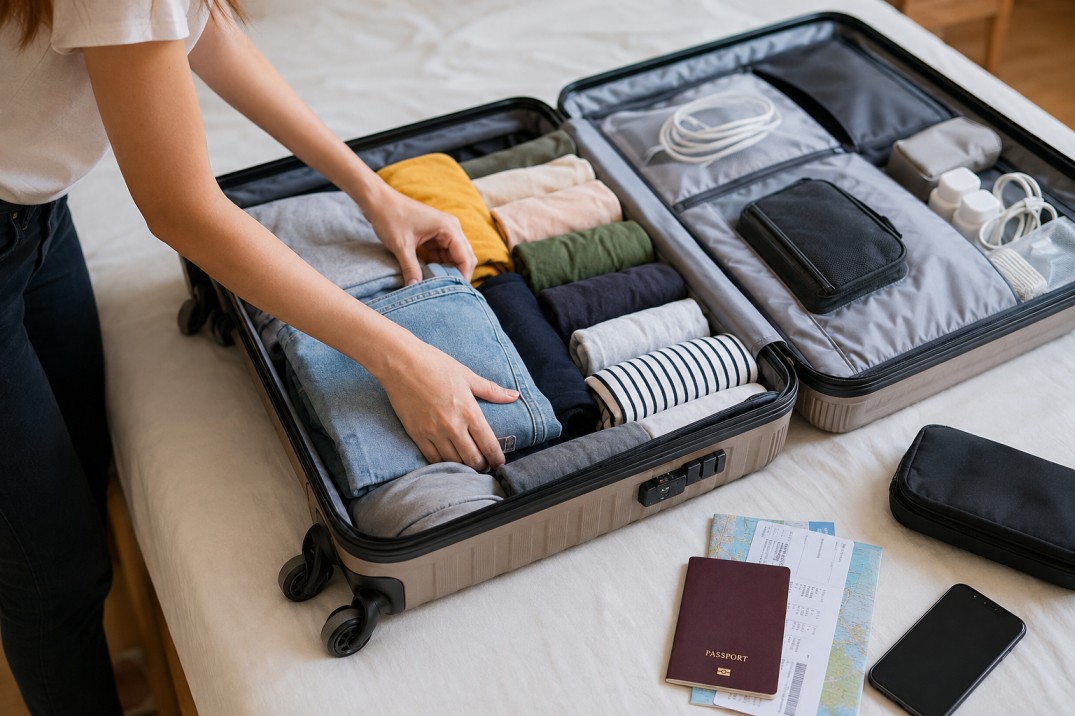
15 Packing Tips Frequent Travelers Swear By
Packing sounds easy until your suitcase is open on the bed and somehow three outfits have turned into twelve. Add a few shoes, chargers, toiletries, and a couple of “just in case” items, and suddenly the zipper is fighting for its life.
Frequent travelers usually approach packing a little differently. They are not necessarily carrying less because they own fewer things, but because they have learned what is actually useful and what usually ends up untouched.
The goal is not to make your trip feel like a minimalist challenge. It is to pack in a way that keeps you organized, comfortable, and ready for whatever the journey brings.
These 15 packing tips can help you save space, reduce stress, and make travel days feel much easier. Whether you are flying for business, heading on vacation, traveling with family, or taking an international trip, these habits are worth borrowing.
Why Smart Packing Makes Travel Easier
Good packing is about more than fitting everything into one suitcase. It affects how quickly you can move through an airport, how easily you can find what you need, and how stressful your arrival feels.
A well-packed bag is easier to carry, easier to organize, and less likely to cause problems at check-in. It also makes it much simpler to manage airport transfers, hotel arrivals, and last-minute schedule changes.
When your essentials are in the right place, you spend less time searching and more time enjoying the trip. That is why frequent travelers tend to treat packing as part of the travel plan, not something they rush through the night before.
Start With a Packing List
One of the simplest packing tips is also one of the most effective. A written packing list prevents you from relying on memory when you are tired, busy, or distracted.
Frequent travelers often keep a basic checklist on their phone and reuse it for every trip. They then add or remove items depending on the destination, weather, purpose, and length of travel.
Build a Reusable Travel Checklist
A good checklist can be divided into a few simple categories:
- Clothing
- Shoes
- Toiletries
- Electronics
- Chargers
- Medication
- Travel documents
- Work items
- Destination-specific essentials
The real benefit is consistency. Once you have a solid list, packing becomes much faster because you are no longer starting from zero every time.
Check the Weather Before You Pack
Packing for the season instead of the actual forecast is a common mistake. A destination may be known for warm weather, but that does not mean every evening will be warm or every day will be dry.
Check the forecast shortly before departure and use it to guide your clothing choices. This can stop you from packing heavy layers you never wear or arriving without something useful like a light jacket.
Pack for the Forecast, Not the Idea of the Destination
Travel photos can make every destination look perfectly sunny. Real weather is usually a little less cooperative.
Look at daytime temperatures, nighttime temperatures, rain chances, and any major weather changes expected during your stay. That small check can help you pack much more realistically.
Plan Outfits Instead of Packing Random Clothes
Random packing usually creates too many clothes and not enough actual outfits. You may end up with five tops, three pairs of pants, and somehow nothing that works together.
Frequent travelers often plan complete outfits before anything goes into the suitcase. This makes it easier to see what you will actually wear and where you may be packing duplicates.
Choose Pieces That Work Together
Neutral and versatile items are especially useful. A pair of pants that works with three tops is usually more valuable than a statement piece you can only wear once.
Think in combinations rather than individual items. This gives you more outfit options without adding more weight to your luggage.
Follow the “Wear It More Than Once” Rule
Not every item needs a one-time-only role on your trip. Jeans, jackets, sweaters, and some outer layers can often be worn more than once without any problem.
This is one of the easiest ways to pack lighter without feeling like you are sacrificing comfort. It also leaves more room for things you genuinely need.
Frequent travelers often ask themselves whether an item can be worn at least twice. If the answer is no, it may not deserve suitcase space unless it is for a specific event.
Roll Some Clothes and Fold Others
You have probably heard that rolling clothes saves space. It can, but that does not mean everything in your suitcase should be rolled into a tiny cylinder.
T-shirts, leggings, casual tops, and lightweight clothing often work well when rolled. Structured items, delicate fabrics, dress shirts, and blazers usually look better when folded.
Use the Method That Fits the Clothing
The goal is not to follow one packing rule for every item. It is to reduce wrinkles while making good use of the space you have.
Experienced travelers tend to mix rolling and folding. That approach is often more practical than forcing everything into the same method.
Use Packing Cubes to Stay Organized
Packing cubes may look like a small travel accessory, but they can make a big difference. They help separate clothing categories and stop your suitcase from turning into one large pile.
You can use one cube for tops, another for bottoms, and another for underwear or sleepwear. Families can also use different cubes for each person, which makes shared luggage much easier to manage.
Give Every Cube a Purpose
The best part of packing cubes is not necessarily saving space. It is knowing exactly where things are.
Instead of pulling out half your suitcase to find one shirt, you can open the right cube and grab it quickly. That small convenience becomes very useful on busy travel days.
Keep Your Heaviest Items at the Bottom
A suitcase that constantly tips over is annoying to pull through an airport. One simple fix is to place your heaviest items near the wheels.
Shoes, toiletry bags, and heavier accessories usually belong at the bottom of a rolling suitcase. This helps keep the bag balanced when it is standing upright.
A better-balanced suitcase is easier to move through terminals, hotel lobbies, parking areas, and pickup zones. It also feels less awkward when you are managing other bags at the same time.
Limit the Number of Shoes You Bring
Shoes can take up a surprising amount of luggage space. They are bulky, often heavy, and easy to overpack.
For many trips, one comfortable walking pair and one nicer pair may be enough. Add a third pair only when your activities genuinely require something specific.
Wear the Bulkiest Pair While Traveling
If you need boots, large sneakers, or another bulky pair, wear them on the travel day. This keeps valuable suitcase space free for lighter items.
Frequent travelers often choose shoes based on function rather than trying to match every outfit perfectly. Comfort usually wins when you are walking through airports, city streets, or long hotel corridors.
Use the Empty Space Inside Your Shoes
Shoes take up space, but they also contain usable space. Small items can often fit inside them without creating extra bulk.
Socks, rolled belts, charging cables, and other compact items can be placed inside clean shoes or shoe bags. This is a simple way to use every part of your suitcase efficiently.
Keep anything fragile or dirty separated properly. The trick works best for soft, clean items that will not be damaged or create a mess.
Keep Important Items in Your Carry-On
Some belongings should never be buried in checked luggage. If your checked bag is delayed, you still need access to the items that keep your trip moving.
Keep identification, travel documents, medication, valuables, electronics, and important chargers with you. Your phone, wallet, keys, and anything difficult to replace should also stay in your carry-on.
Pack One Basic Change of Clothes
A clean shirt, underwear, and a few basic toiletries can be extremely useful after a long delay. They take up very little space but can make a frustrating situation much easier.
This is especially helpful on international trips or journeys with connections. A small backup kit can buy you time while your checked luggage catches up.
Pack a Small “First 24 Hours” Kit
One of the smartest habits frequent travelers use is packing for the first day separately. The idea is simple: keep everything you are likely to need immediately in one easy-to-reach place.
This might include a toothbrush, deodorant, medication, fresh clothes, a phone charger, sleepwear, and basic skincare. You should not have to unpack your entire suitcase just to get through your first evening.
A first-day kit is especially useful when you arrive late at night. It can also help when your hotel room is not ready, your luggage is delayed, or your schedule changes unexpectedly.
Keep Liquids Simple and Secure
Few things are more annoying than opening your suitcase and discovering that shampoo has leaked onto your clothes. A little extra protection can save you from a messy start to the trip.
Keep liquids together in a waterproof or clear pouch. For bottles that are likely to leak, place them inside an additional sealed bag.
Bring Only What You Will Actually Use
Full-size toiletries often add unnecessary weight. Smaller containers are usually easier to manage for short trips.
You can also consider what your hotel or accommodation already provides. There is little reason to carry large bottles of basic products when they are readily available at your destination.
Keep Chargers and Cables Together
Chargers have a talent for disappearing exactly when you need them. Keeping every cable in one small organizer solves that problem quickly.
Put your phone cable, laptop charger, power bank, headphones, smartwatch charger, and travel adapter in the same place. You will know exactly where to look every time.
Check Plug Requirements Before International Travel
Different destinations may use different plug shapes. Check what type of adapter you need before leaving home.
It is much easier to solve this before the trip than to search for an electronics store after landing. A small universal travel adapter can also be useful for people who travel internationally often.
Leave Some Empty Space in Your Suitcase
Packing every inch of your suitcase may feel efficient, but it can create problems later. Your return trip rarely looks exactly like your departure.
You may buy souvenirs, gifts, clothing, or other items during the trip. You may also find that neatly folding everything on the way home is much harder than it was in your bedroom.
Leaving a little room makes repacking much easier. It also reduces the temptation to force the suitcase closed while sitting on top of it.
Do a Final “Can I Remove This?” Check
Once you finish packing, do not close the suitcase immediately. Take one final look and question the items you are least sure about.
Ask yourself whether you will genuinely use each item. You may be surprised by how many things were packed simply because they seemed potentially useful.
Try asking:
- Will I actually wear this?
- Can another item do the same job?
- Am I packing this only “just in case”?
- Can I easily buy this at my destination?
Removing even two or three unnecessary items can create useful space. Frequent travelers become good packers partly because they become comfortable leaving things behind.
Packing Tips for Business Travelers
Business travel usually requires a balance between looking professional and keeping luggage manageable. Wrinkle-resistant clothing and versatile outfits can help reduce how much you need to bring.
Keep your laptop, work documents, chargers, and any presentation materials in your carry-on. It is also smart to pack at least one backup professional outfit in case your schedule changes.
Make sure work essentials are easy to reach during the journey. Digging through a packed suitcase in the airport is not the best way to start a business trip.
Packing Tips for Families
Family travel can quickly turn into luggage overload. The easiest way to stay organized is to separate everyone's belongings clearly.
Packing cubes can work especially well for children. You can assign a cube to each child or organize clothing by day.
Keep snacks, medication, a change of clothes, and basic child essentials in your carry-on. These items become very useful during delays, long lines, or unexpected schedule changes.
Packing Tips for Solo Travelers
Solo travelers usually benefit from staying mobile. When you are handling every bag yourself, lighter luggage can make the journey much more comfortable.
Choose versatile clothing and avoid unnecessary duplicates. Keep valuables secure and make sure your essential travel information is easy to access.
A suitcase you can comfortably manage on your own is usually better than one packed to its limit. This becomes especially important when using public transportation, walking between terminals, or meeting an airport driver.
Packing Tips for International Travelers
International travel often requires a few extra items. Your passport, visa documents, medication, travel adapter, and reservation details should all be easy to reach.
Keep digital copies of important documents, but consider saving key information offline too. Internet access is not always reliable immediately after landing.
It is also helpful to save your hotel address and airport transportation details on your phone. Having this information ready can make your arrival much smoother.
What Not to Pack “Just in Case”
“Just in case” can be one of the most expensive phrases in travel. It is how one extra shirt becomes five extra outfits and one spare pair of shoes becomes half a suitcase.
Think realistically about what you are likely to use. Many common items can be purchased at your destination if an unexpected need comes up.
Try to avoid packing too many duplicate clothes, bulky shoes, full-size toiletries, and gadgets you rarely use. The goal is not to be unprepared, but to stop preparing for situations that are unlikely to happen.
How to Make Arrival Day Easier
Smart packing should make the end of your flight easier too. The last thing you want after landing is to dig through several bags looking for your phone charger, hotel address, or transportation confirmation.
Keep your identification, payment method, medication, phone, and airport transfer details easy to access. You should also save your destination address and any pickup instructions before boarding.
When your luggage is organized and your transportation is already planned, arrival day becomes much less stressful. You can collect your bags, meet your driver, and continue your journey without unnecessary confusion.
Quick Pre-Travel Packing Checklist
Before leaving home, run through this simple checklist:
- Check the weather
- Review your airline baggage allowance
- Plan complete outfits
- Limit unnecessary shoes
- Pack important travel documents
- Keep medication in your carry-on
- Organize chargers and cables
- Secure liquids
- Pack one change of clothes
- Leave some empty suitcase space
- Check your luggage weight if needed
- Save your accommodation details
- Review your airport transportation plan
A final checklist only takes a few minutes. It can save you from realizing at the airport that something important is still sitting on your kitchen table.
Frequently Asked Questions
What Is the Best Way to Pack Efficiently for Travel?
Start with a list, plan complete outfits, and organize items by category. Packing only what has a clear purpose usually works better than trying to squeeze as much as possible into the suitcase.
Using packing cubes can also make the bag easier to manage. The goal should be organization and practicality, not simply maximizing every inch of space.
Is Rolling Clothes Better Than Folding Them?
It depends on the type of clothing. Casual and lightweight items often work well when rolled, while structured or delicate clothing is usually better folded.
Most travelers get the best results by using both methods. There is no need to force every garment into the same packing style.
How Do Frequent Travelers Pack Light?
They usually pack versatile clothing, limit shoes, use smaller toiletries, and avoid too many “just in case” items. They also plan outfits before packing instead of adding random clothes.
The biggest difference is usually decision-making. Experienced travelers get better at recognizing what they actually use during a trip.
What Should I Always Keep in My Carry-On?
Keep identification, travel documents, medication, valuables, electronics, and important chargers with you. A basic change of clothes can also be useful.
Anything that would be difficult to replace quickly should generally stay close to you. This gives you a backup plan if checked luggage is delayed.
How Can I Avoid Overpacking?
Pack once, then review everything before closing the suitcase. Remove items that do not have a clear purpose.
It also helps to plan outfits and limit duplicates. The more intentional your packing becomes, the easier it is to spot unnecessary items.
How Much Extra Room Should I Leave in My Suitcase?
You do not need to leave half your suitcase empty. Simply leave enough room that the bag closes comfortably and you have some space for shopping, souvenirs, or easier repacking.
A little extra space can make the return journey much easier. It also reduces pressure on zippers and makes your luggage easier to organize.
Final Thoughts
The best packing tips are usually the simple ones. Make a list, choose versatile clothes, keep important items close, organize your bag, and stop giving too much space to things you probably will not use.
Packing well can make the entire journey feel easier, from check-in to baggage claim. It also helps you stay organized when you arrive and need to move quickly to your hotel, meeting, or next destination.
Once your suitcase is sorted, it is worth planning your airport transportation too. With LocalRideGo, you can arrange your airport ride in advance so one more part of the journey is already taken care of before you land.